-
 September 3, 2026
Finding the right primary care doctors in Columbia can be an important step toward maintaining your health and managing medical concerns throughout your life.
Primary care is often the first point of contact when you have a new health concern, need preventive care, require routine screenings or need ongoing management for a chronic condition.
A strong relationship with a primary care physician can also make it easier to keep track of your medical history, medications, preventive screenings and long-term health goals.
What Is Primary Care?
Primary care provides ongoing, comprehensive healthcare for individuals across different stages of life. It can include preventive healthcare, routine examinations, treatment of common illnesses, chronic disease management and coordination with specialists when additional care is needed.
🚨 Primary Care Is Not Emergency Care
Primary care is designed for routine and ongoing healthcare needs. If you experience severe chest pain, severe difficulty breathing, sudden weakness, loss of consciousness or another potentially life-threatening emergency, call 911 or seek immediate emergency medical attention.
Why Primary Care Matters
Primary care is more than visiting a doctor when you are sick. It provides a foundation for preventive healthcare and long-term health management.
Regular visits allow your healthcare provider to understand your health history, identify risk factors and monitor changes over time.
This ongoing relationship can be particularly useful when managing conditions such as high blood pressure, diabetes, high cholesterol and other chronic health concerns.
Preventive Care
Routine healthcare can help identify health risks and determine which preventive services may be appropriate for you.
Chronic Care
Primary care physicians can help monitor and manage ongoing health conditions.
Routine Healthcare
From physical examinations to common illnesses, primary care provides an ongoing source of medical support.
Care Coordination
When specialty care is needed, your primary care team can help coordinate your overall healthcare.
1Annual Physical Exams
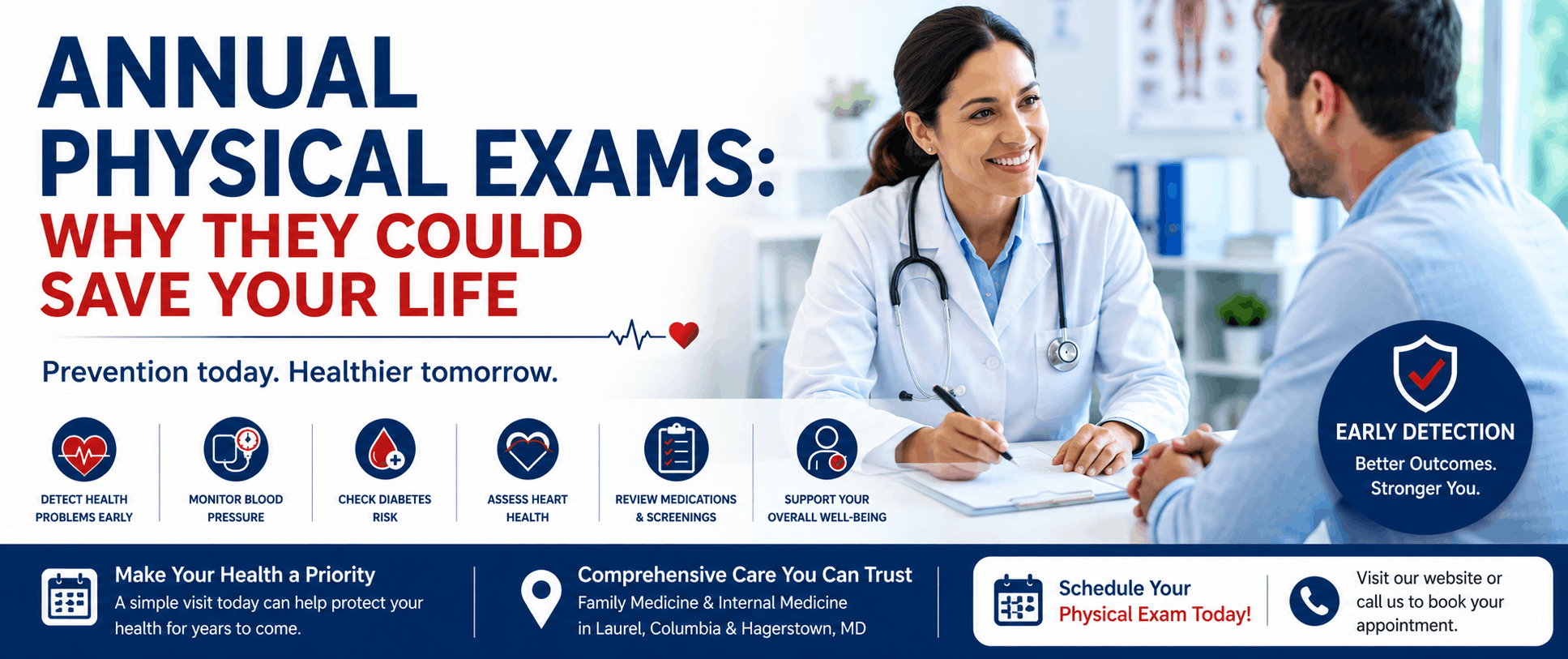
One of the most common reasons people visit a primary care doctor is for a routine physical examination.
A physical exam gives your doctor an opportunity to review your general health, medical history, medications, lifestyle and preventive-care needs.
Depending on your age and individual risk factors, your provider may recommend appropriate screening tests, vaccinations or additional evaluations.
Bring Important Information to Your Physical
- Current medication list
- Vitamins and supplements
- Known allergies
- Previous medical diagnoses
- Family health history
- Recent test results when available
- Questions or concerns you want to discuss
2Preventive Healthcare
Preventive care is one of the most important functions of primary care.
Rather than waiting until a health problem becomes serious, preventive healthcare focuses on identifying risk factors and using appropriate screenings, vaccinations, counseling and lifestyle support.
The specific preventive services recommended for you depend on factors such as your age, sex, medical history, family history and individual risk.
Prevention Can Include
- Routine health examinations
- Blood pressure monitoring
- Diabetes screening when appropriate
- Cholesterol assessment
- Cancer screening recommendations
- Vaccination review
- Lifestyle counseling
- Health-risk assessment
3Managing High Blood Pressure
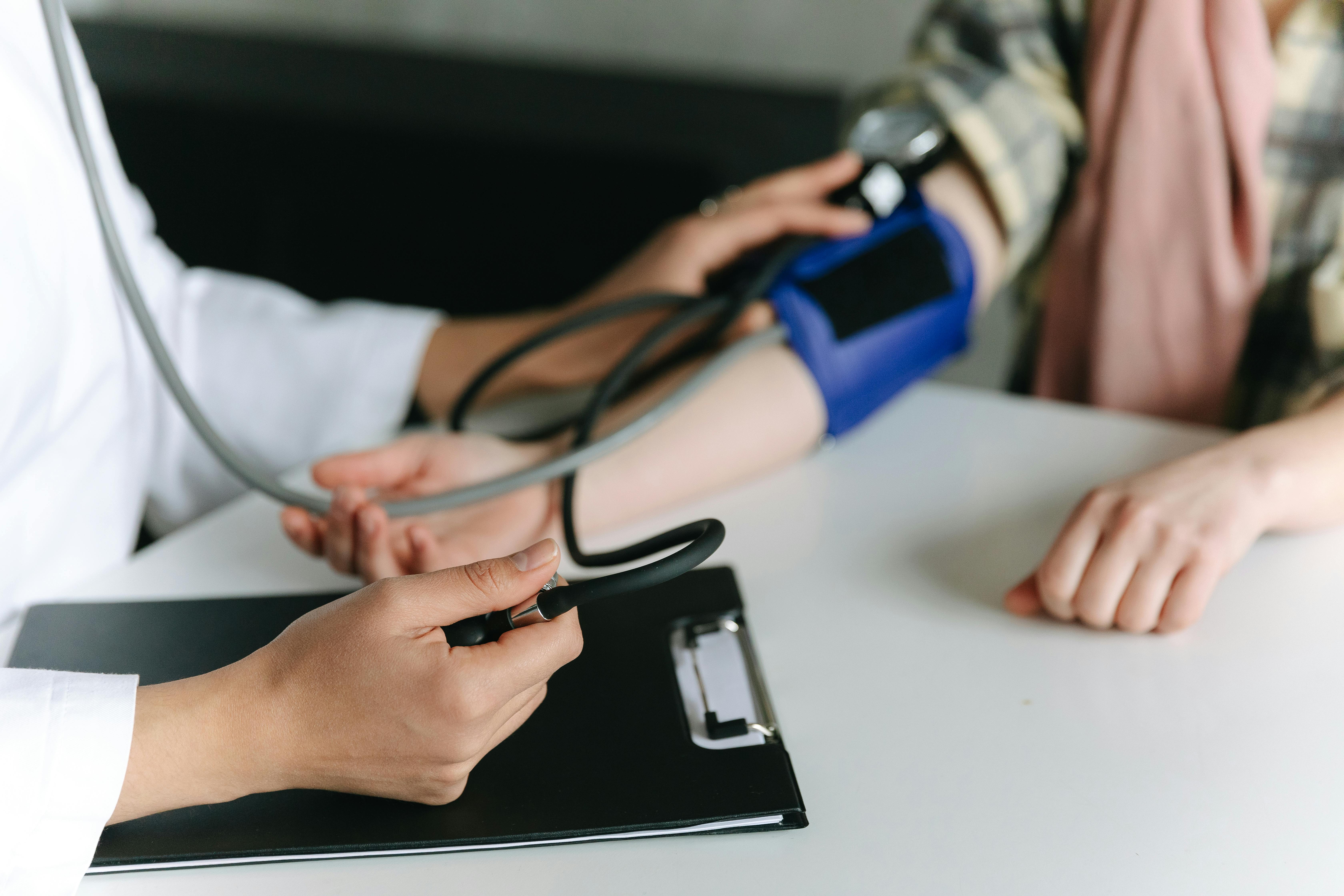
High blood pressure is a common health condition that may not cause noticeable symptoms.
Primary care visits provide opportunities to measure blood pressure and identify whether further evaluation or monitoring may be appropriate.
If you already have hypertension, your primary care physician can help monitor your blood pressure and work with you on an individualized management plan.
4Diabetes and Prediabetes Care
Diabetes and prediabetes can affect many aspects of your health. Some people may have few noticeable symptoms, particularly during the early stages.
Depending on your age and risk factors, your primary care doctor may recommend blood glucose or HbA1c testing.
If diabetes is diagnosed, ongoing primary care can help monitor your condition, medications, lifestyle and other health risks.
5Heart Health and Cardiovascular Risk
Primary care also plays an important role in cardiovascular prevention.
Your physician may review factors such as blood pressure, cholesterol, diabetes, smoking, physical activity, weight, diet and family history.
When a cardiovascular concern requires specialist evaluation, primary care can also help coordinate care with cardiology and other specialists.
Blood Pressure
Monitoring blood pressure can help identify an important cardiovascular risk factor.
Cholesterol
Your provider can determine whether cholesterol testing and cardiovascular risk assessment are appropriate.
Healthy Lifestyle
Nutrition, physical activity and tobacco avoidance can all contribute to cardiovascular health.
Specialist Coordination
When necessary, your primary care team can coordinate evaluation with a cardiologist or other specialist.
6Managing Chronic Health Conditions
Many people need healthcare for conditions that require monitoring over months or years.
Primary care doctors can provide ongoing management for a wide range of chronic health concerns.
Depending on the individual patient, these may include hypertension, diabetes, high cholesterol, thyroid disorders, asthma and other conditions.
Long-Term Care Means More Than Prescriptions
Managing a chronic condition can involve regular monitoring, medication review, laboratory testing, lifestyle changes, preventive screening and coordination with specialists when necessary.
7Treatment for Common Illnesses
Primary care doctors also evaluate and treat many common health concerns.
Depending on the condition, primary care may help with respiratory illnesses, digestive complaints, minor infections, headaches, fatigue, musculoskeletal concerns and many other non-emergency problems.
If your symptoms suggest that you need specialty or emergency care, your primary care team can help guide you toward the appropriate level of care.
8Medication Management
If you take multiple medications, regular review can be an important part of safe healthcare.
Your primary care doctor can review medications, discuss potential side effects and consider whether changes are appropriate based on your current health status.
Never Stop Prescription Medication on Your Own
Do not stop or change a prescription medication without discussing it with your healthcare provider. Some medications need to be adjusted gradually or require medical supervision.
9Coordinating Specialist Care
Sometimes a health concern requires evaluation by a specialist.
A primary care physician can help provide the broader picture of your health while coordinating care with specialists when appropriate.
This can be particularly helpful when you have multiple medical conditions or see more than one specialist.
10Family Medicine vs. Internal Medicine
When searching for primary care doctors in Columbia, MD, you may see both Family Medicine and Internal Medicine providers.
Family Medicine
Family Medicine providers care for patients across different stages of life and provide comprehensive primary care.
Internal Medicine
Internal Medicine physicians specialize in the prevention, diagnosis and management of health conditions in adults.
Primary Care
Both can serve as an ongoing source of healthcare and preventive medical management.
Your Individual Needs
The best choice depends on your age, health needs, medical history and personal preferences.
When Should You See a Primary Care Doctor?
You do not have to wait until you are sick to schedule an appointment with a primary care physician.
Regular healthcare visits can help you stay current with preventive care while also providing a place to discuss new health concerns.
- Annual or routine physical examinations
- Preventive health assessments
- Blood pressure concerns
- Diabetes or prediabetes monitoring
- Cholesterol management
- Medication review
- Persistent or recurring symptoms
- Chronic disease management
- Health screening questions
- General health concerns
How to Choose Primary Care Doctors in Columbia
When searching for a primary care physician in Columbia, MD, it is useful to consider more than location alone.
Experience
Look for a healthcare provider whose training and experience align with your medical needs.
Services
Consider whether the practice provides preventive care, chronic disease management and routine healthcare.
Accessibility
A convenient location and manageable appointment schedule can make ongoing healthcare easier.
Continuity of Care
Having an ongoing relationship with a primary care team can help your providers understand your health over time.
Primary Care Doctors in Columbia, Maryland
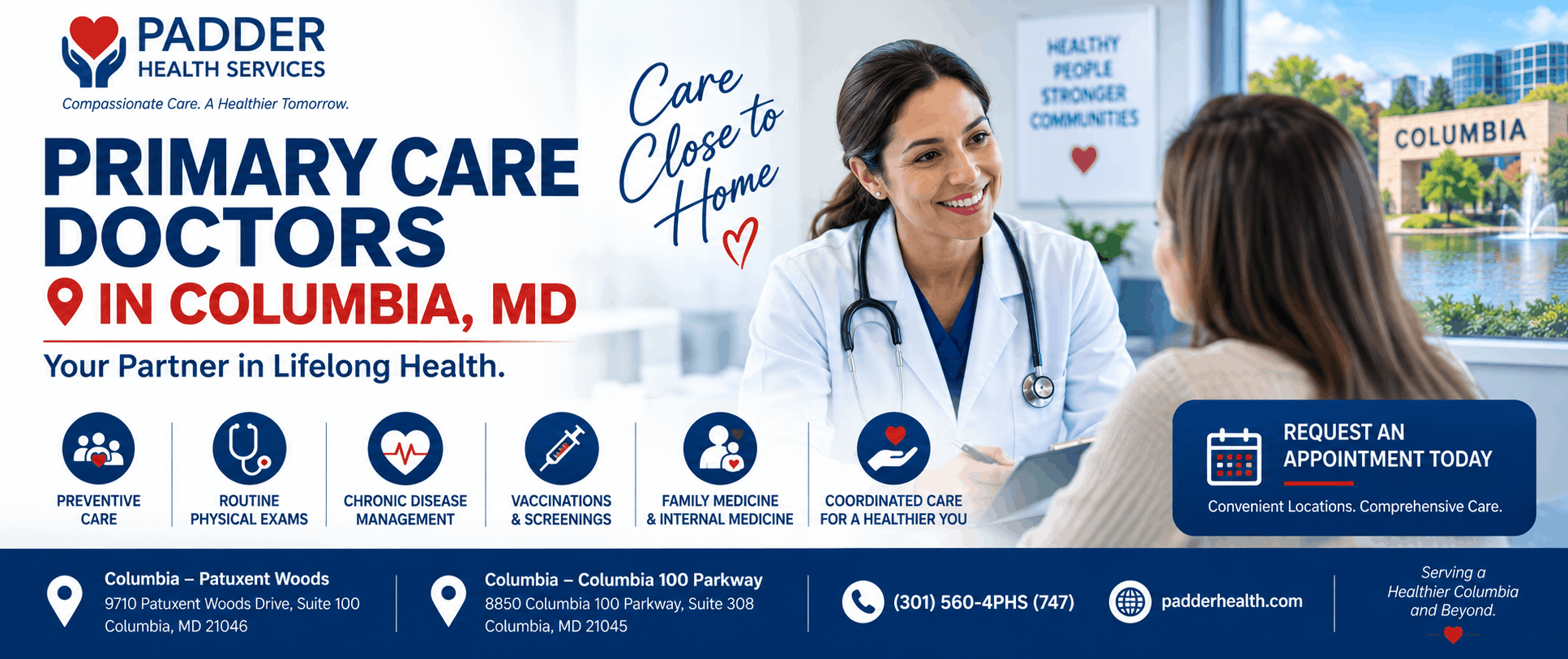
Padder Health Services provides comprehensive healthcare through Internal Medicine, Family Medicine and Cardiology.
The practice currently has two Columbia locations, including the newer Patuxent Woods location and the Columbia 100 Parkway location.
📍 Patuxent Woods – Columbia
9710 Patuxent Woods Drive, Suite 100
Columbia, MD 21046
Phone: (301) 560-4PHS (747)
Hours: Monday–Friday, 9:00 AM–5:00 PM
📍 Columbia 100 Parkway
8850 Columbia 100 Parkway, Suite 308
Columbia, MD 21045
Phone: (301) 560-4PHS (747)
Hours: Monday–Friday, 9:00 AM–5:00 PM
Primary Care Services at Padder Health Services
The primary care team at Padder Health Services includes providers in Family Medicine and Internal Medicine.
The practice’s provider directory currently lists Family Medicine providers including Gulshan Nazir, MD, Roshni L. Chettiar, CRNP and Emerson Y. Chang, PA-C, along with Internal Medicine physicians and providers.
Padder Health Services states that its mission is to provide team-based medicine using evidence-based medicine while placing patients’ interests first.
Primary Care Can Help With
- Annual physical examinations
- Preventive healthcare
- Family Medicine
- Internal Medicine
- Chronic disease management
- Blood pressure monitoring
- Diabetes management
- Medication management
- Health screenings
- Care coordination
Padder Health Services and Coordinated Care
Padder Health Services participates in the Maryland Primary Care Program (MDPCP). According to the practice, the program provides additional resources for care management and coordination, including support following hospital admissions and integration of behavioral health needs with primary care.
The practice also states that its care coordination resources can help providers receive information about hospital admissions and share appropriate health information such as laboratory and imaging results with other healthcare professionals involved in a patient’s care.
What to Bring to Your Primary Care Appointment
Prepare for Your Visit
- Photo ID
- Insurance card
- Current medication list
- List of allergies
- Previous medical records when appropriate
- Recent laboratory or imaging results
- Family health history
- Questions about your health
Padder Health Services asks patients to bring their insurance card and ID card for each visit.
Questions to Ask Your Primary Care Doctor
- Are there any health risks I should be monitoring?
- Is my blood pressure healthy?
- Do I need diabetes or cholesterol screening?
- Which preventive screenings are appropriate for me?
- Are my medications still appropriate?
- Are my vaccinations up to date?
- What lifestyle changes could improve my health?
- Do I need to see a specialist?
- When should I schedule my next appointment?
Why Continuity of Care Matters
Healthcare is often more effective when your providers understand your medical history over time.
A primary care team can track changes in your health, review previous test results, monitor chronic conditions and keep preventive care on your radar.
This ongoing relationship can also help your healthcare provider recognize changes that may otherwise be difficult to identify during a single visit.
Primary Care for Every Stage of Adult Life
Your healthcare needs can change as you move through different stages of life.
Young adults may need preventive care and health counseling. Middle-aged adults may require more attention to cardiovascular risk, diabetes screening and cancer screening. Older adults may need more complex chronic disease management and medication review.
A primary care relationship can provide continuity as these needs evolve.
Frequently Asked Questions
What is a primary care doctor?
A primary care doctor provides ongoing healthcare for common medical concerns, preventive care and chronic disease management. Primary care can also help coordinate care with specialists when needed.
How do I find primary care doctors in Columbia?
When searching for primary care doctors in Columbia, MD, consider the provider’s specialty, experience, services, location, availability and whether the practice meets your healthcare needs.
What is the difference between primary care and urgent care?
Primary care focuses on ongoing healthcare, prevention and chronic disease management. Urgent care generally addresses acute conditions that require prompt attention but are not necessarily life-threatening.
Can a primary care doctor manage diabetes?
Primary care physicians commonly participate in the ongoing management of diabetes and related health risks. Some patients may also require care from endocrinologists or other specialists.
Can a primary care doctor treat high blood pressure?
Yes. Primary care physicians commonly evaluate and manage high blood pressure, including monitoring, lifestyle counseling and medication management when appropriate.
Do I need a primary care doctor if I feel healthy?
Preventive healthcare is important even when you feel healthy. Routine care can provide opportunities to assess health risks and determine whether screenings or vaccinations are appropriate.
Does Padder Health Services have primary care doctors in Columbia?
Yes. Padder Health Services provides Family Medicine and Internal Medicine services and has Columbia locations in Maryland.
Where is Padder Health Services located in Columbia?
Padder Health Services lists a Patuxent Woods location at 9710 Patuxent Woods Drive, Suite 100, Columbia, MD 21046, and a Columbia 100 Parkway location at 8850 Columbia 100 Parkway, Suite 308, Columbia, MD 21045.
How can I schedule an appointment?
You can contact Padder Health Services at (301) 560-4PHS (747) or use the practice’s online appointment request option.
Find Primary Care Doctors in Columbia, MD
Choosing a primary care doctor is an important part of maintaining your health. Whether you need an annual physical, preventive screening, chronic disease management or help with a new health concern, establishing an ongoing relationship with a primary care provider can make healthcare more organized and consistent.
Padder Health Services provides Family Medicine and Internal Medicine services in Columbia, Maryland, along with Cardiology and comprehensive multispecialty care.
Looking for Primary Care Doctors in Columbia?
Connect with Padder Health Services for comprehensive primary care and ongoing health management in Columbia, Maryland.
Request an AppointmentFinal Thoughts
Finding the right primary care doctors in Columbia can help you build a long-term approach to your health.
Primary care is not simply about treating an illness when symptoms appear. It can include preventive care, routine physical examinations, chronic disease management, medication review, health screening and coordination with specialists.
If you live in Columbia, Maryland, having a convenient primary care practice can make it easier to stay connected with your healthcare team.
Padder Health Services offers Family Medicine and Internal Medicine services at its Columbia locations, with a focus on team-based and comprehensive healthcare.
Your Health Starts With Primary Care
Whether you are due for a physical, need help managing a chronic condition or simply want to establish a regular healthcare routine, primary care can provide an important foundation for your long-term health.