-
 August 17, 2026
Chest discomfort can be frightening, especially when you’re not sure whether you’re experiencing heartburn or a heart attack. Both conditions can cause discomfort in the chest, and in some cases their symptoms can feel remarkably similar.
Heartburn is usually related to stomach acid moving back into the esophagus, while a heart attack occurs when blood flow to part of the heart is severely reduced or blocked. However, symptoms can overlap, and it is not always possible to tell the difference based only on how the discomfort feels.
Understanding the potential warning signs can help you make safer decisions about your health. Most importantly, new, persistent, or unexplained chest pain should never simply be assumed to be heartburn.
🚨 Chest Pain? Don’t Guess.
If you have persistent or unexplained chest pain, especially with shortness of breath, sweating, nausea, dizziness, or pain spreading to your arm, jaw, neck, back, or shoulder, seek emergency medical care immediately.
If you think you may be having a heart attack, call 911 or your local emergency number.
What Is a Heart Attack?
A heart attack, medically called a myocardial infarction, occurs when blood flow to part of the heart muscle becomes severely reduced or blocked. A common cause is plaque buildup in the coronary arteries. If a plaque ruptures, a blood clot can form and block blood flow, potentially damaging the heart muscle.
A heart attack is a medical emergency. Prompt treatment is important because restoring blood flow quickly can help limit damage to the heart.

Heart Attack Symptoms Can Vary
Not every heart attack causes sudden, severe chest pain. Symptoms can vary between people, and some individuals may experience less typical symptoms. Women, older adults, and people with diabetes may sometimes have less obvious symptoms.
What Is Heartburn?
Heartburn is a burning sensation or discomfort in the chest that occurs when stomach acid flows backward into the esophagus. It is commonly associated with acid reflux and may occur after eating.
Heartburn may become more noticeable when lying down or bending over. Some people also experience a bitter or acidic taste in the mouth or a sensation of stomach contents coming back into the throat.

Why Can Heartburn Feel Like a Heart Attack?
The heart and esophagus are located close to one another inside the chest. Because of this, discomfort originating from the esophagus can sometimes be felt in an area that feels similar to heart-related chest discomfort.
This overlap is one reason it can be difficult to determine the cause based only on symptoms. Mayo Clinic notes that even experienced healthcare professionals may not always be able to distinguish heartburn from a heart attack based solely on a person’s history and physical examination.
Important Safety Point
Feeling better after taking an antacid does not necessarily prove that chest discomfort was harmless. If you are unsure whether chest pain is heartburn or a heart problem, it is safer to seek medical evaluation.
Heart Attack vs Heartburn: Common Differences
Certain features may make heartburn more likely, while others can be more concerning for a heart-related problem. However, these patterns are not a substitute for emergency medical evaluation.
| Feature | Heartburn | Heart Attack |
|---|---|---|
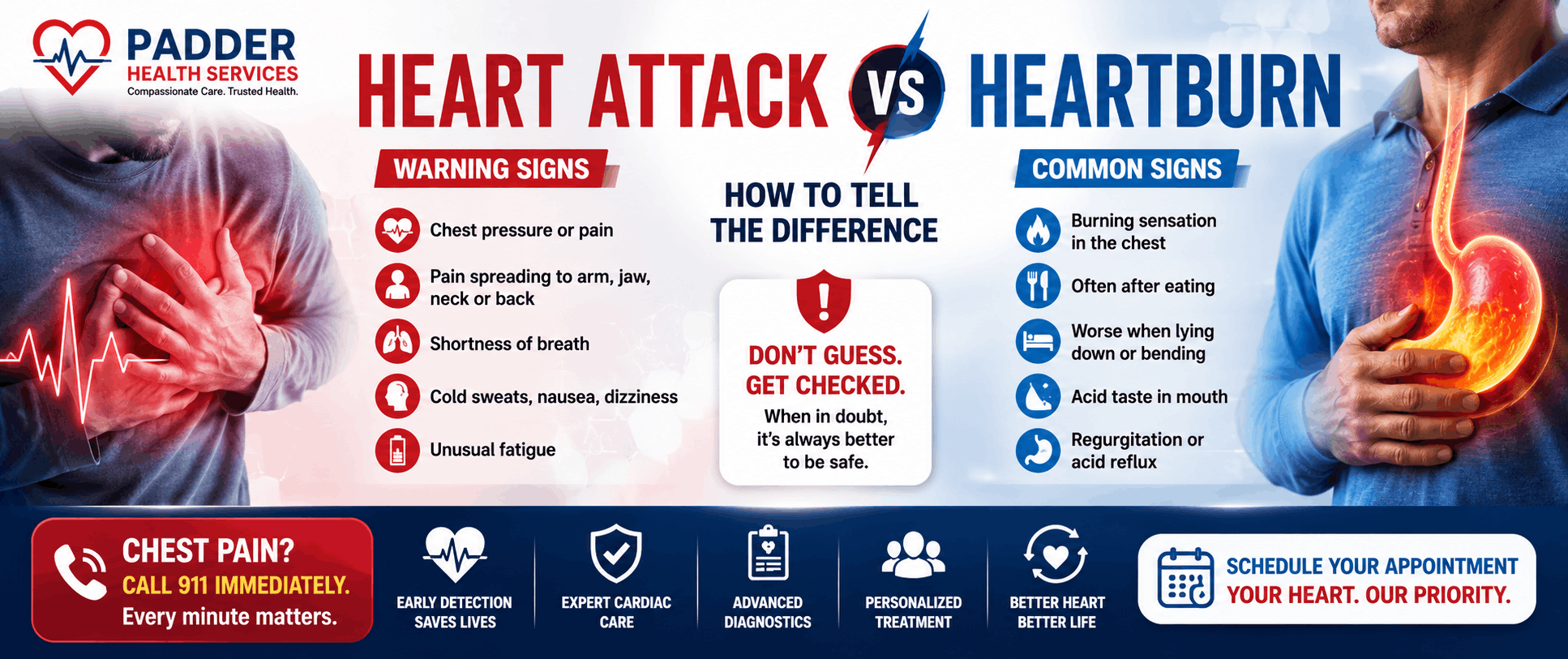
| Type of discomfort | Often described as a burning sensation behind the breastbone. | May feel like pressure, tightness, squeezing, fullness, aching, or pain. |
| Timing | Often occurs after eating and may become worse when lying down or bending over. | May occur during activity or at rest and can persist or come and go. |
| Taste in mouth | A bitter or acidic taste may occur. | Usually not associated with an acidic taste. |
| Pain spreading | Usually remains around the chest or upper abdomen. | May spread to the arm, shoulder, back, neck, jaw, or upper abdomen. |
| Other symptoms | May include acid reflux or regurgitation. | May include shortness of breath, sweating, nausea, fatigue, lightheadedness, or dizziness. |
These differences can provide useful clues, but they cannot reliably rule out a heart attack. Chest pain can have many causes, and medical testing may be needed to determine the cause.
Heartburn Symptoms You May Notice
Typical heartburn symptoms include:
- Burning discomfort behind the breastbone
- Symptoms occurring after eating
- Symptoms becoming worse when lying down
- Symptoms becoming worse when bending over
- A bitter or acidic taste in the mouth
- Regurgitation of stomach contents
Occasional heartburn is common. However, frequent heartburn or symptoms that interfere with your daily activities should be discussed with a healthcare professional.
Heart Attack Warning Signs You Should Never Ignore
A heart attack does not always look the way it is portrayed in movies. Some people experience obvious chest pressure, while others may have less dramatic symptoms. Recognizing the possible warning signs is important because early treatment can help limit damage to the heart.
Possible Warning Signs of a Heart Attack
- Pressure, squeezing, fullness, or discomfort in the center of the chest
- Chest discomfort that lasts several minutes or comes and goes
- Pain or discomfort spreading to the arm, shoulder, back, neck, jaw, or upper abdomen
- Shortness of breath
- Cold sweating
- Nausea or vomiting
- Lightheadedness or dizziness
- Unusual or unexplained fatigue
- A feeling of weakness or impending illness
Some people may experience only a few of these symptoms. Others may have symptoms without significant chest pain. If you suspect a heart attack, do not wait to see whether the symptoms disappear.
🚨 Suspect a Heart Attack? Act Immediately.
If you or someone around you develops symptoms that could indicate a heart attack, call 911 or your local emergency number immediately. Do not drive yourself to the hospital unless there is no other option.
Emergency medical professionals can begin assessment and treatment while transporting you to an appropriate medical facility.
Symptoms That May Suggest Heartburn
Heartburn commonly occurs when stomach acid flows backward into the esophagus. It can cause a burning sensation in the chest and may be accompanied by other digestive symptoms.
Burning Chest Sensation
Heartburn often produces a burning feeling behind the breastbone or in the upper chest.
After Eating
Symptoms may occur after a meal, particularly after eating a large or rich meal.
Worse When Lying Down
Acid reflux symptoms can become more noticeable when lying down or bending over.
Acidic Taste
Some people experience a sour or bitter taste in the mouth or notice stomach contents coming back into the throat.
Common Heartburn Triggers
Certain foods, beverages, and habits can make acid reflux symptoms more likely. Triggers vary from person to person.
- Large meals
- Eating shortly before going to bed
- Fatty or fried foods
- Spicy foods
- Chocolate
- Caffeine
- Alcohol
- Carbonated beverages
- Smoking
Heartburn Prevention Tip
If you frequently experience heartburn, keeping a simple food and symptom diary may help you identify individual triggers. Avoiding meals close to bedtime and maintaining a healthy weight may also help reduce reflux symptoms.

Who Is at Higher Risk for a Heart Attack?
Heart disease can affect people with different backgrounds and lifestyles. Certain factors, however, increase cardiovascular risk. Some can be changed through lifestyle and medical treatment, while others cannot.
High Blood Pressure
Long-term high blood pressure can damage arteries and place additional strain on the heart.
High Cholesterol
Elevated LDL cholesterol can contribute to plaque buildup in the arteries.
Diabetes
Diabetes can damage blood vessels and increase the risk of cardiovascular disease.
Smoking
Smoking damages blood vessels and substantially increases the risk of heart disease and heart attack.
Family History
A family history of premature heart disease can increase your cardiovascular risk.
Physical Inactivity
Lack of regular physical activity can contribute to obesity, high blood pressure, diabetes, and other cardiovascular risk factors.
Heart Attack Risk Factors You Can Work On
Although some risk factors such as age and family history cannot be changed, many cardiovascular risk factors can be managed. Working with your healthcare provider can help you create a plan based on your individual health needs.
- Maintain a healthy weight
- Stay physically active
- Eat a heart-healthy diet
- Manage high blood pressure
- Keep cholesterol levels under control
- Manage diabetes
- Avoid tobacco products
- Limit alcohol consumption
- Get adequate sleep
- Attend recommended health screenings

Can Heartburn Increase Your Risk of Heart Disease?
Heartburn itself is a digestive condition and is not the same as coronary artery disease. Having acid reflux does not automatically mean that you have heart disease.
The important concern is that the symptoms can overlap. A person experiencing chest discomfort may incorrectly assume that the problem is heartburn when the underlying cause is cardiovascular.
Don’t Self-Diagnose Chest Pain
If you are unsure whether chest discomfort is caused by heartburn or your heart, don’t rely on symptoms alone. New, unexplained, or persistent chest discomfort should be medically evaluated.
Heartburn or Heart Attack? What Should You Do?
When chest discomfort occurs, it can be difficult to know what is causing it. The safest approach depends on the severity and associated symptoms.
Possible Heartburn
If you have familiar, mild reflux symptoms without concerning features, discuss recurring symptoms with your healthcare provider. They can evaluate whether acid reflux or another digestive condition may be responsible.
Possible Heart Problem
New or unexplained chest pressure, especially with shortness of breath, sweating, nausea, dizziness, or pain spreading to other areas, requires urgent medical attention.
Why You Shouldn’t Wait for Severe Symptoms
Heart disease can develop gradually. Some people have no obvious symptoms until a serious cardiovascular event occurs. Regular medical care can help identify risk factors such as high blood pressure, high cholesterol, diabetes, and smoking before they contribute to significant heart disease.
Preventive cardiovascular care is especially important for people with a strong family history of heart disease or multiple cardiovascular risk factors.
Know Your Heart Health Numbers
- Blood pressure
- Cholesterol
- Blood glucose
- Body weight
- Other health measurements recommended by your provider
Regular monitoring can help you and your healthcare team identify changes early and take appropriate action.
How Do Doctors Tell the Difference?
Because heartburn and a heart attack can produce similar symptoms, healthcare professionals may need to perform medical tests rather than relying only on how the discomfort feels.
If you arrive at an emergency department with concerning chest pain, the medical team may assess your symptoms, medical history, vital signs, and risk factors and perform tests to determine whether your heart is involved.
Electrocardiogram (ECG/EKG)
An ECG records the electrical activity of the heart and can help identify certain abnormalities associated with heart attacks and abnormal heart rhythms.
Blood Tests
Blood tests can help healthcare professionals look for evidence of heart muscle injury. Cardiac troponin is one important blood marker used when evaluating possible heart attacks.
Imaging Tests
Depending on the situation, doctors may use imaging or other diagnostic tests to evaluate the heart, blood vessels, lungs, or digestive system.
Medical History
Your symptoms, medical history, medications, risk factors, and family history can all help healthcare professionals determine what evaluations may be appropriate.

When Should You See a Cardiologist?
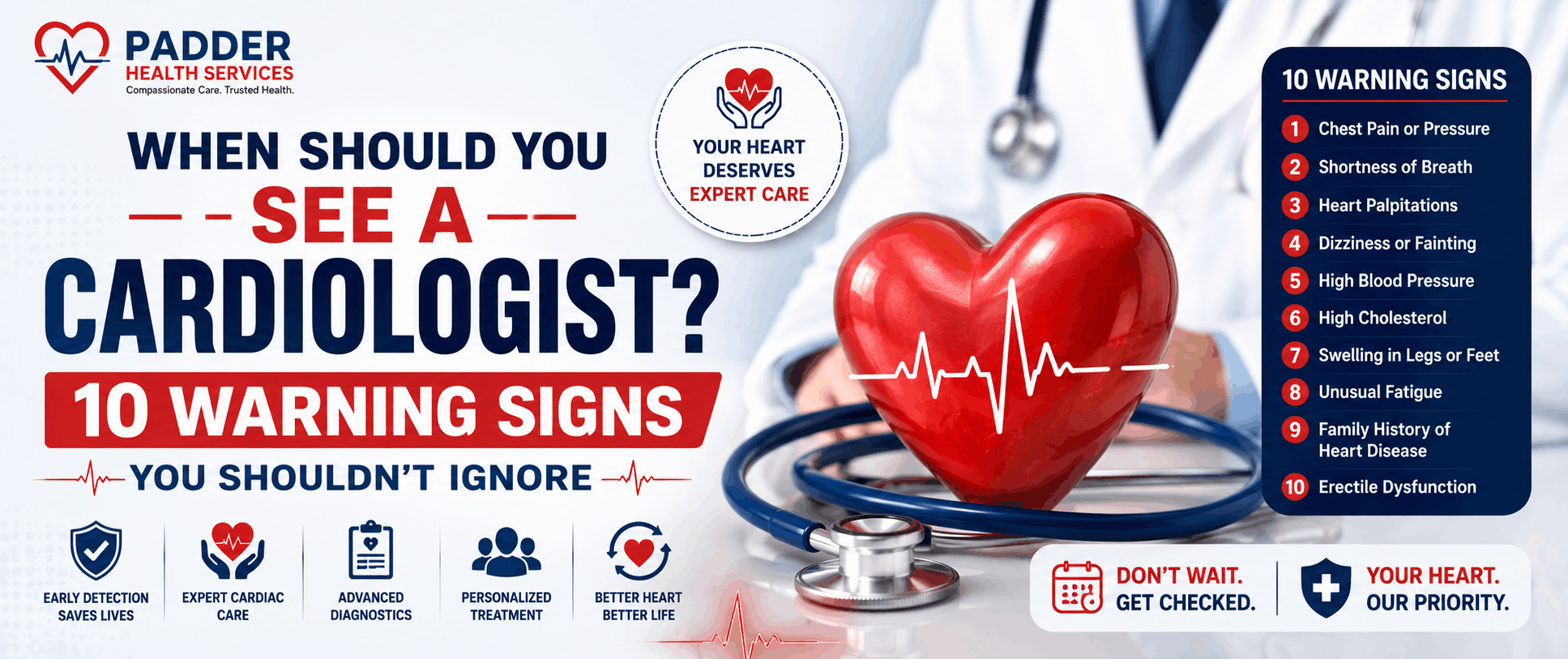
You may benefit from seeing a cardiologist if you have cardiovascular symptoms, abnormal cardiac test results, established heart disease, or significant risk factors for cardiovascular disease.
- Recurring or unexplained chest discomfort
- Shortness of breath with activity or at rest
- Frequent heart palpitations
- Unexplained dizziness or fainting
- High blood pressure that is difficult to control
- High cholesterol combined with other cardiovascular risk factors
- Diabetes with cardiovascular risk factors
- A strong family history of heart disease
- Abnormal ECG or other cardiac test results
- Known coronary artery disease or another heart condition
Primary Care and Cardiology Work Together
Your Primary Care provider is often the first person to evaluate chest symptoms and cardiovascular risk factors. When specialized care is appropriate, your provider may recommend a cardiology consultation. Primary Care and Cardiology teams can work together to provide coordinated long-term care.
What If You’re Not Sure Whether It’s Heartburn or a Heart Attack?
If you are experiencing chest discomfort and cannot confidently determine its cause, it is safer to take the symptoms seriously rather than assume they are caused by acid reflux.
This is particularly important if the discomfort is new, severe, persistent, or accompanied by shortness of breath, sweating, nausea, dizziness, weakness, or discomfort spreading to the arm, shoulder, back, neck, or jaw.
🚨 When in Doubt, Get Emergency Help
Do not wait for chest pain to become severe. If you think you may be having a heart attack, call 911 or your local emergency number immediately.
Do not attempt to diagnose the cause yourself and do not delay emergency care while waiting for a routine appointment.
Frequently Asked Questions
How can I tell if chest pain is heartburn or a heart attack?
There is no reliable way to distinguish every case based only on symptoms. Heartburn often causes a burning sensation and may occur after eating or when lying down, while a heart attack may cause pressure, squeezing, fullness, or discomfort that can spread to other areas. However, the symptoms can overlap, so new or unexplained chest pain should be taken seriously.
Can heartburn feel exactly like a heart attack?
Yes. Heartburn can sometimes feel very similar to heart-related chest discomfort. This overlap is why it can be difficult for someone to determine the cause without medical evaluation.
Does heartburn mean I have heart disease?
No. Heartburn is generally related to acid reflux and is not the same condition as coronary artery disease. However, experiencing heartburn does not rule out a heart problem if you also develop new or unexplained chest discomfort.
Can a heart attack happen without chest pain?
Yes. Some people may experience less typical symptoms or may have little or no obvious chest pain. Symptoms can include shortness of breath, unusual fatigue, nausea, sweating, dizziness, or discomfort in the back, neck, jaw, shoulder, or arm.
Should I see a cardiologist for recurring chest pain?
Recurring or unexplained chest discomfort should be discussed with a healthcare professional. Depending on your symptoms and cardiovascular risk factors, your Primary Care provider may recommend evaluation by a cardiologist.
Can acid reflux cause chest pain?
Yes. Acid reflux can cause burning chest discomfort commonly known as heartburn. However, because heart-related chest discomfort can feel similar, it is important not to assume that unexplained chest pain is caused by acid reflux.
What are the biggest risk factors for heart attack?
Important risk factors include high blood pressure, high cholesterol, diabetes, smoking, obesity, physical inactivity, age, and family history of cardiovascular disease. Your overall risk depends on the combination of these and other factors.
How Padder Health Services Can Help
At Padder Health Services, our experienced Primary Care providers and Cardiologists provide comprehensive cardiovascular care, preventive services, evaluation of concerning symptoms, and long-term management of heart conditions.
Our team can help evaluate cardiovascular risk factors such as high blood pressure, high cholesterol, diabetes, obesity, and family history while developing an individualized plan for better heart health.
Our Cardiovascular Services Include
- Cardiovascular risk assessment
- Preventive cardiology
- Heart disease evaluation
- Blood pressure management
- Cholesterol management
- Heart rhythm evaluation
- Heart failure management
- Cardiac diagnostic testing
- Diabetes and cardiovascular risk management
- Long-term cardiovascular care
Take Your Heart Health Seriously
Understanding the difference between heartburn and a heart attack is important, but chest symptoms should never be self-diagnosed when a heart problem is possible. If you have concerns about your cardiovascular health, talk with a qualified healthcare professional.
Final Thoughts
Understanding heart attack vs heartburn can help you recognize when chest discomfort needs immediate attention. Heartburn commonly occurs because stomach acid moves into the esophagus, while a heart attack occurs when blood flow to part of the heart is reduced or blocked.
Although there are differences between the two conditions, their symptoms can overlap significantly. A burning sensation, pressure, tightness, or discomfort in the chest should not automatically be attributed to acid reflux.
If chest discomfort is new, unexplained, severe, persistent, or accompanied by shortness of breath, sweating, nausea, dizziness, weakness, or pain spreading to the arm, shoulder, back, neck, or jaw, seek emergency medical care immediately.
For ongoing prevention, regular checkups can help identify cardiovascular risk factors such as high blood pressure, high cholesterol, diabetes, and obesity. Early identification and appropriate management can help protect your heart over the long term.
At Padder Health Services, our Primary Care and Cardiology teams are committed to providing personalized cardiovascular care and helping patients make informed decisions about their health.
Related Heart Health Resources
- When Should You See a Cardiologist? 10 Warning Signs You Shouldn’t Ignore
- 10 Early Warning Signs of Heart Disease You Should Never Ignore
- High Blood Pressure: The Silent Killer Every Adult Should Monitor
- How to Lower Cholesterol Naturally: Doctor-Recommended Tips
- 10 Foods That Naturally Improve Heart Health
- Cardiology Services
- Primary Care Services
- Meet Our Providers
- Request an Appointment
Don’t Ignore Chest Pain
When it comes to chest discomfort, it is better to seek medical attention than to assume the symptoms are harmless. Your heart health deserves prompt attention and professional evaluation when needed.