-
 August 27, 2026
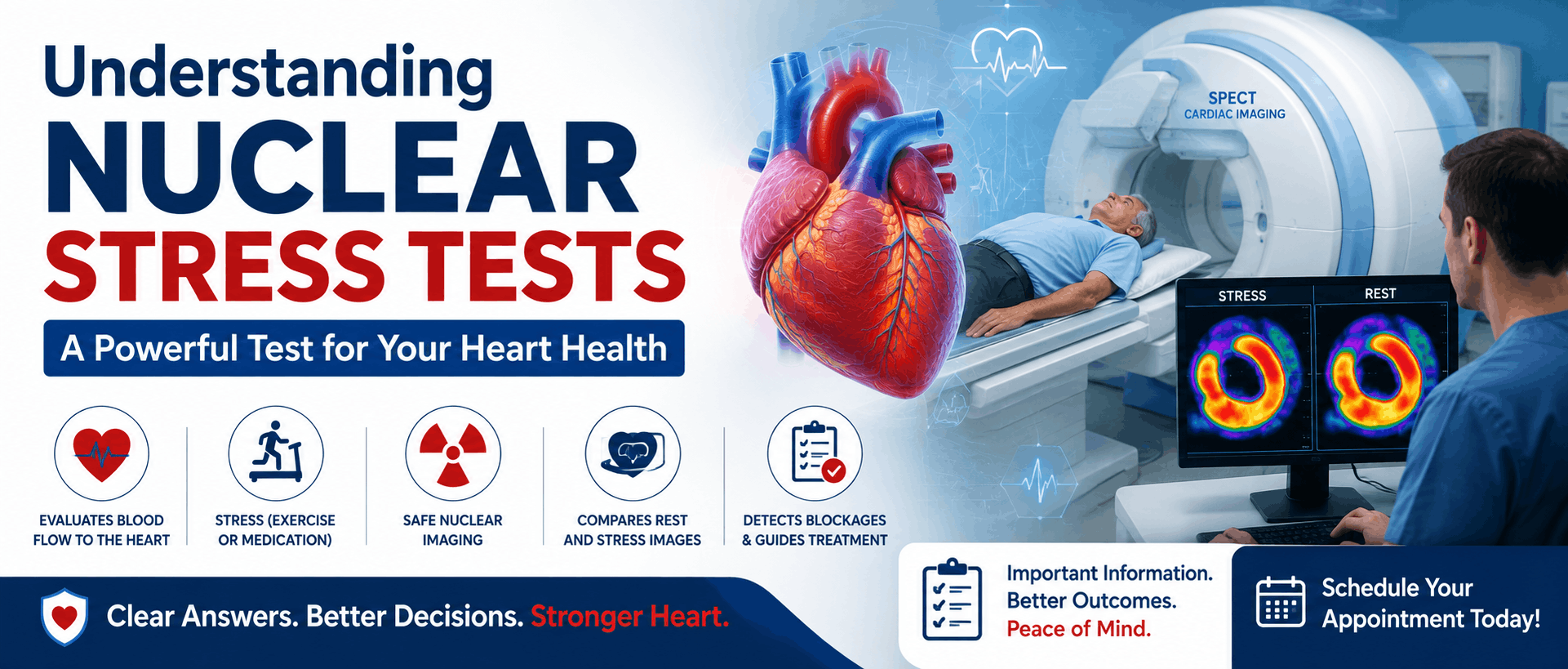
A nuclear stress test is a specialized heart imaging test that helps doctors evaluate blood flow to the heart muscle during rest and physical or medication-induced stress. It can provide information that may not be available from a standard exercise stress test alone.
The test uses a small amount of radioactive material called a radiotracer. A special camera detects the tracer and creates images showing how blood reaches different areas of the heart.
By comparing images taken when the heart is at rest with images taken under stress, healthcare professionals can look for areas where blood flow may be reduced. Nuclear stress testing is also known as myocardial perfusion imaging (MPI) and may use SPECT or PET technology depending on the clinical situation.
🚨 Chest Pain Should Never Be Ignored
A nuclear stress test is a planned diagnostic examination. If you are currently experiencing severe or persistent chest pain, severe shortness of breath, fainting, or other symptoms that may indicate a heart emergency, do not wait for a scheduled test. Seek emergency medical care immediately.
What Is a Nuclear Stress Test?
A nuclear stress test combines a stress test with nuclear imaging. A radiotracer is injected into a vein, and specialized imaging equipment creates pictures of blood flow through the heart muscle.
Images are generally obtained at rest and again after the heart has been stressed through exercise or medication. Comparing these images helps doctors identify areas that may not receive enough blood during stress.
Why Do Doctors Recommend a Nuclear Stress Test?
Your healthcare provider may recommend a nuclear stress test when there is a concern about coronary artery disease or reduced blood flow to the heart.
The test may be useful when someone has symptoms such as chest discomfort or shortness of breath, has known coronary artery disease, or needs additional information about how well the heart responds to stress.
A nuclear stress test can also help healthcare professionals evaluate the effectiveness of treatment and determine whether additional testing or treatment may be appropriate.
Evaluate Blood Flow
The test can show how well blood reaches different areas of the heart during rest and stress.
Look for Coronary Disease
Abnormal blood-flow patterns may suggest narrowing or blockage in coronary arteries.
Assess Heart Function
Some nuclear imaging studies can also provide information about heart pumping function.
Guide Treatment
Results may help your healthcare team determine whether additional evaluation or treatment is needed.
1How Does a Nuclear Stress Test Work?
A nuclear stress test generally involves obtaining images of the heart at rest and then obtaining additional images after the heart has been placed under stress.
A small amount of radiotracer is injected through an IV. The tracer travels through the bloodstream to the heart. A specialized camera detects the tracer and produces images of the heart muscle.
During the stress portion, you may walk on a treadmill or pedal a stationary bicycle. If you cannot exercise adequately, medication may be used to increase blood flow to the heart in a way that simulates the effects of exercise.
There Are Two Main Parts
- Resting heart images
- Stress heart images
The healthcare team compares the images to evaluate differences in blood flow between rest and stress.
2What Is the Radiotracer?
A radiotracer is a small amount of radioactive material used to make internal structures visible on specialized imaging equipment.
For a nuclear stress test, the radiotracer travels through the bloodstream to the heart. Areas receiving adequate blood flow absorb the tracer differently from areas receiving reduced blood flow, allowing the imaging system to create a picture of myocardial perfusion.
The amount of radiation used for diagnostic nuclear imaging is relatively small, and healthcare professionals consider the potential benefits and risks before performing the examination.
3Exercise Stress vs. Medication Stress
There are different ways to create the stress condition required for the test.
Exercise Stress
You may walk on a treadmill or pedal a stationary bicycle while your heart rate, blood pressure and electrical activity are monitored.
Medication Stress
If you cannot exercise adequately, medication may be given through an IV to increase blood flow to the heart or otherwise create the desired stress response.
The choice depends on your physical ability, medical history and the purpose of the examination. Your healthcare team will determine which approach is appropriate for you.
4What Happens Before the Test?
Before the nuclear stress test, the healthcare team will usually ask about your medical history, symptoms, medications and ability to exercise.
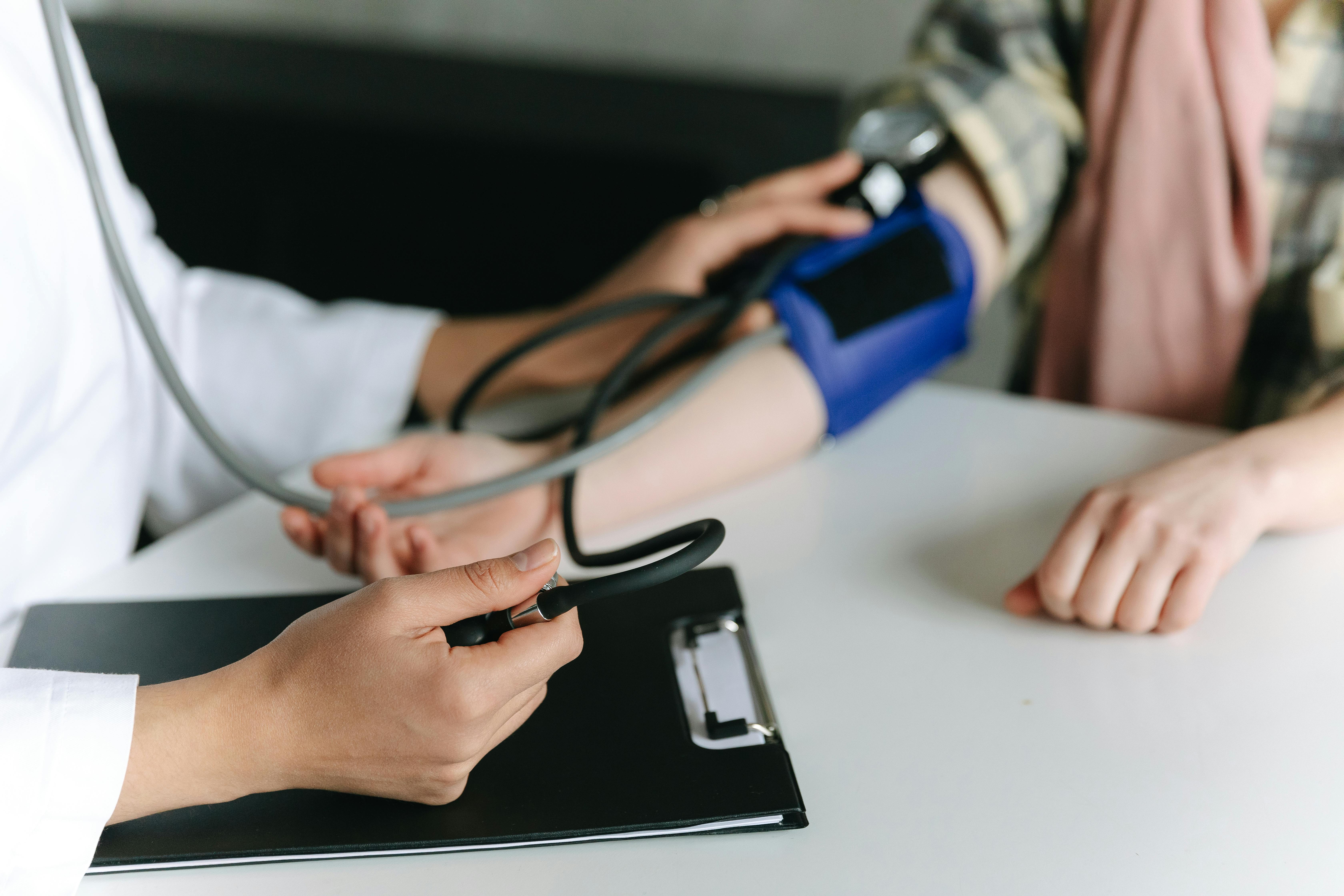
An IV line is typically placed in a vein in the arm or hand. Electrodes may be placed on your chest and other areas to monitor your heart rhythm, while a blood pressure cuff is used to monitor your blood pressure.
Tell Your Healthcare Team About:
- All medications you are taking
- Any allergies
- Heart conditions
- Breathing problems or asthma
- Diabetes
- Pregnancy or possible pregnancy
- Breastfeeding
- Previous reactions to nuclear medicine procedures
5How Should You Prepare?
Preparation instructions can vary depending on the specific nuclear stress test and the facility performing it. Your healthcare team should provide the instructions that apply to your examination.
You may be asked not to eat, drink or smoke for a certain period before the test. Caffeine may also need to be avoided before some types of nuclear stress testing because it can interfere with certain medications used during pharmacologic stress testing.
Some medications can also affect test results. However, never stop or change prescription medications unless your healthcare professional specifically tells you to do so.
Follow Your Facility’s Instructions
Preparation requirements are not identical for every nuclear stress test. Follow the exact fasting, caffeine and medication instructions provided by your cardiology or nuclear medicine team.
6What Happens During the Test?
During the test, electrodes are placed on your chest to monitor your heart’s electrical activity. A blood pressure cuff monitors your blood pressure throughout the stress portion.
An IV is used to administer the radiotracer. After the tracer has had time to reach the heart, images are obtained while you remain still on an imaging table.
If exercise is being used, you will then walk on a treadmill or pedal a stationary bicycle. As your heart reaches the appropriate stress level, another dose of radiotracer may be given, followed by another set of images.

7How Long Does a Nuclear Stress Test Take?
The total duration varies depending on the type of tracer, imaging system and testing protocol. A nuclear stress test can take two or more hours in some settings because there may be waiting periods between tracer administration and imaging.
Your healthcare facility should tell you approximately how long you should expect to be there and whether you need to remain in the facility between the different portions of the test.
Plan Ahead
- Wear comfortable clothing.
- Wear appropriate walking shoes if exercise will be used.
- Arrive early enough to complete registration.
- Bring your medication list.
- Follow all fasting and caffeine instructions.
- Ask your healthcare team if you have questions about medications.
8What Might You Feel During the Stress Portion?
If you exercise during the test, you may experience normal effects of physical exertion such as faster breathing, sweating and fatigue.
If medication is used instead of exercise, you may temporarily experience sensations such as flushing, headache, nausea, shakiness or shortness of breath depending on the medication used.
Tell the healthcare team immediately if you experience chest pain, severe shortness of breath, dizziness, significant discomfort or any other concerning symptom.
Your Test Is Closely Monitored
Your heart rhythm, blood pressure and symptoms are monitored during the stress portion. The healthcare team can stop the test or provide appropriate treatment if concerning changes occur.
9What Do Nuclear Stress Test Results Show?
The healthcare team compares the images obtained at rest with those obtained during stress.
Normal Blood Flow
If blood flow appears normal at rest and during stress, significant stress-related reduction in blood flow may be less likely.
Reduced Flow During Stress
Normal blood flow at rest but reduced blood flow during stress may suggest a problem affecting coronary blood flow.
Reduced Flow at Rest and Stress
Reduced blood flow during both phases may indicate significant coronary disease or damage from a previous heart attack, depending on the findings.
Possible Prior Heart Damage
Areas that do not take up tracer may represent scar or damage from a previous heart attack, although additional evaluation may sometimes be needed.
Nuclear stress test findings should always be interpreted by a qualified healthcare professional in the context of your symptoms, medical history and other test results.
10What Happens After the Test?
After the stress portion is complete, your heart rate and blood pressure may continue to be monitored for a short period.
In many cases, people can return to their usual activities after the test unless their healthcare team gives different instructions. Drinking water may be recommended to help your body eliminate the radiotracer.
After Your Nuclear Stress Test
- Follow any instructions provided by your healthcare team.
- Drink fluids if advised.
- Ask when and how you will receive your results.
- Attend any recommended follow-up appointment.
- Do not interpret an individual image or result without your healthcare professional’s guidance.
Are Nuclear Stress Tests Safe?
Nuclear stress tests are generally considered safe and are performed under medical supervision. However, like any medical procedure, they have potential risks.
Possible complications can include abnormal heart rhythms, changes in blood pressure, chest discomfort and, very rarely, a heart attack. Medication used for pharmacologic stress can also cause temporary symptoms.
Because the examination uses a radioactive tracer, there is a small amount of radiation exposure. Healthcare professionals consider the potential diagnostic benefit against the radiation risk.
Tell Your Doctor If You May Be Pregnant
If you are pregnant, may be pregnant or are breastfeeding, tell your doctor and the imaging team before the examination. This information is important when planning nuclear medicine procedures.
What Are the Benefits of a Nuclear Stress Test?
Blood Flow Information
It provides information about blood flow to different areas of the heart during rest and stress.
Functional Information
Some nuclear imaging techniques can provide information about how well the heart muscle functions.
Non-Surgical Test
The examination is performed without inserting a catheter into the coronary arteries.
Treatment Planning
Results can help healthcare professionals decide whether further testing or treatment may be appropriate.
What Is the Difference Between a Nuclear Stress Test and a Regular Stress Test?
A standard exercise stress test primarily monitors how the heart responds to physical activity using an ECG, heart rate, blood pressure and symptoms.
A nuclear stress test adds imaging with a radiotracer. This provides additional information about blood flow to the heart muscle at rest and during stress.
Regular Stress Test
- ECG monitoring
- Heart rate
- Blood pressure
- Exercise capacity
- Symptoms during exercise
Nuclear Stress Test
- All or many stress-test measurements
- Radiotracer imaging
- Blood-flow assessment
- Rest and stress comparison
- Additional information about heart muscle
A healthcare professional determines which test is most appropriate based on your symptoms, medical history and the clinical question that needs to be answered.
Who May Need a Nuclear Stress Test?
A nuclear stress test may be considered for people with symptoms or medical conditions that raise concern about coronary artery disease or reduced blood flow to the heart.
- Chest discomfort or suspected angina
- Shortness of breath with activity
- Known coronary artery disease
- Previous heart attack
- Assessment after certain cardiac treatments
- Evaluation of exercise capacity
- Assessment of suspected reduced blood flow
Not everyone with chest pain or cardiovascular risk factors needs a nuclear stress test. Your healthcare professional will determine whether the test is appropriate.

What If I Cannot Exercise?
Some people cannot exercise enough on a treadmill or bicycle because of mobility limitations, certain medical conditions or inadequate exercise capacity.
In these situations, medication may be used to create the cardiovascular stress needed for imaging. This is commonly called a pharmacologic or chemical stress test.
Tell Your Team About Your Exercise Ability
Before the test, explain whether you have difficulty walking, using stairs, cycling or exercising for several minutes. This helps your healthcare team select an appropriate stress method.
What Happens If the Nuclear Stress Test Is Abnormal?
An abnormal nuclear stress test does not automatically mean that you have a major coronary blockage. The results need to be interpreted alongside your symptoms, medical history and other investigations.
Depending on the findings, your healthcare professional may recommend additional testing or treatment. In some situations, coronary angiography or another cardiovascular examination may be considered.
One Test Is Part of the Bigger Picture
Your cardiologist considers your complete clinical picture rather than relying on a single test result. Ask your healthcare team to explain what your specific findings mean and what the recommended next step is.
Frequently Asked Questions
What is a nuclear stress test used for?
A nuclear stress test is used to evaluate blood flow to the heart muscle during rest and stress. It can help identify areas that may not receive enough blood during stress and may assist in evaluating coronary artery disease.
Is a nuclear stress test painful?
The IV insertion may cause brief discomfort. The stress portion can make you feel tired or cause temporary sensations such as faster breathing. Some medications used for pharmacologic stress may cause temporary symptoms such as flushing, headache or shortness of breath.
Can I eat before a nuclear stress test?
Preparation varies. Some patients are instructed not to eat or drink for a certain period and may need to avoid caffeine. Follow the specific instructions given by your healthcare facility rather than assuming that preparation is the same for every test.
Can I take my medications before the test?
Some medications may affect the test, but you should not stop or change them on your own. Ask your healthcare team whether any medications need to be adjusted before your examination.
How long does a nuclear stress test take?
The duration varies depending on the imaging protocol and tracer used. Some nuclear stress tests take two or more hours because the procedure includes waiting periods between tracer injections and imaging.
Is radiation from a nuclear stress test dangerous?
The test involves a small amount of radiation from the radiotracer. Healthcare professionals use the lowest appropriate dose for diagnostic imaging and consider the benefits and risks before performing the examination.
Can a nuclear stress test detect blocked arteries?
It can identify patterns of reduced blood flow that may suggest significant coronary artery disease. However, it does not directly provide the same anatomical view of coronary arteries as coronary angiography.
Can I drive home after a nuclear stress test?
Whether you can drive depends on the type of stress medication used, your condition and your facility’s instructions. Ask your healthcare team before the test if you need someone to accompany you.
What does a normal nuclear stress test mean?
A normal result generally indicates that blood flow to the imaged areas of the heart appears adequate under the conditions tested. Your doctor will interpret the result in relation to your symptoms and other cardiovascular risk factors.
How Padder Health Services Can Help
At Padder Health Services, our Cardiology and Primary Care teams provide comprehensive evaluation of cardiovascular symptoms and risk factors.
If you have chest discomfort, shortness of breath, known coronary artery disease or other concerns about your heart health, our healthcare professionals can evaluate your symptoms and determine whether further cardiovascular testing may be appropriate.
Our Cardiovascular & Primary Care Services Include
- Cardiology consultation
- Heart disease evaluation
- Cardiovascular risk assessment
- Chest pain evaluation
- Shortness of breath assessment
- Blood pressure evaluation
- Cholesterol management
- Diabetes management
- Preventive cardiology
- Long-term cardiovascular care
Understand Your Heart Health
If your doctor has recommended a nuclear stress test or you are experiencing symptoms that concern you, understanding the purpose of the test can help you feel more prepared. Talk with an experienced healthcare professional about your individual heart health.
Final Thoughts
A nuclear stress test is an important diagnostic tool that combines stress testing with specialized imaging to evaluate blood flow to the heart muscle.
The test generally involves obtaining images at rest and during stress. Stress may be created through exercise or medication, depending on your ability to exercise and your medical needs.
Preparation varies, so it is important to follow the specific instructions provided by your healthcare team. This may include avoiding food, caffeine or certain medications, but you should never change prescribed medication without medical advice.
Nuclear stress tests are generally safe and are performed with continuous medical monitoring. The results can provide valuable information about coronary blood flow and help your healthcare team determine whether additional evaluation or treatment is appropriate.
At Padder Health Services, our Cardiology and Primary Care teams are committed to helping patients understand their cardiovascular health, investigate concerning symptoms and receive appropriate personalized care.
Take Your Heart Symptoms Seriously
Shortness of breath, swelling, unusual fatigue and reduced exercise tolerance can have many causes. If you are concerned about your heart health, speak with an experienced healthcare professional for appropriate evaluation.
Your Heart Test Is Part of Your Heart Care
If your doctor recommends a nuclear stress test, ask questions about why it has been recommended, how to prepare, what the test will evaluate and when you can expect your results. Understanding the process can make your cardiovascular evaluation easier and less stressful.